
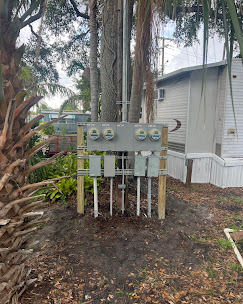
Hidden Power Losses in Your Long Home Circuits
Voltage drop sounds like a fancy term, but it is really simple. Think of voltage as water pressure in a hose. The farther it has to travel through the hose, the more pressure it loses before it gets to the sprinkler. Your wiring works the same way. Long electrical runs lose some of that “push” before the power reaches the lights, outlets, or motors at the end.
In the Bradenton and Sarasota area, this shows up a lot because many homes have long driveways, detached garages, pool pads set away from the house, and dock or canal-front lighting. All of these use long circuits. Over time, that loss of pressure, or voltage, can show up as dim lights, slow motors, and stressed equipment.
Common long-circuit setups around here include things like:
- Detached garages or workshops fed from the main house
- Long driveways with gate motors, columns, or landscape lights
- Pool equipment pads away from the main panel
- Dock and seawall lighting along canals or bays
- Additions, bonus rooms, or lanais fed from the original panel
Homeowners should care because voltage drop is not just annoying. It can lead to:
- Dim or flickering lights
- Sluggish well or pool pumps
- Tripping breakers
- Overheated plugs and devices
- Wasted energy over time
The key is to understand what causes voltage drop on long runs and how to address it in a technical, code-compliant way instead of using quick band‑aid fixes that create new risks.
How Voltage Drop Shows up in Real Homes
Voltage drop does not usually show itself at the panel. It shows up at the far end of the circuit, where the power is weakest. Many people blame the power company, but the problem is often inside the property wiring.
Typical signs that point to voltage drop, not bad utility power, include:
- Lights that dim when the A/C, pool pump, or microwave starts
- Garage door openers or gate motors that strain, chatter, or stall
- Outlets far from the panel that will not run tools or appliances properly
There are also nuisance issues that are easy to dismiss:
- Electronics that randomly shut off or reboot in one specific room
- Phone or laptop chargers that seem slow at certain outlets
- LED fixtures that only flicker at the far end of a circuit, not closer in
These patterns look different from a simple bad breaker or a failed outlet. A single bad device usually affects just that one location and is either on or off. Voltage drop tends to:
- Show up only when larger loads start
- Affect several devices at the end of a long run
- Change with time of day as more loads switch on
Accurate electrical troubleshooting means sorting out whether you have a loose connection, a failing device, or a long‑run voltage issue. Getting the diagnosis right is the only way to get a fix that actually lasts.
The Science Behind Long Circuit Voltage Drop
Voltage drop comes down to resistance. All wire resists the flow of electricity a little bit. The longer and smaller the wire, the higher the resistance, and the more voltage you lose under load.
The main technical factors are:
- Wire length: longer runs mean more resistance
- Wire gauge: smaller wires have higher resistance
- Circuit load: more amps mean more voltage drop
- Connection quality: loose or corroded joints add resistance
So if you run a long circuit to a dock, then add more and more lights and outlets, you can easily reach a point where, under load, the voltage at the end drops enough to cause trouble. That is when motors buzz instead of starting smoothly or LEDs flicker when pumps kick on.
There are common design targets used in residential wiring, such as keeping voltage drop on a branch circuit around a few percent and keeping the total drop from panel to device within a reasonable limit. On short runs inside a typical room, that is easy. On long driveway lights, well pumps, or second‑story additions tied back to the original panel, it takes planning and sometimes upsized wire.
Material and installation matter too. For long runs, things that make voltage drop worse include:
- Using conductors that are too small for the distance and load
- Aging splices and wirenuts that loosen over time
- Corroded outdoor junction boxes
- Heat and humidity breaking down metal and insulation
Florida heat, salty air near the water, and constant moisture speed up corrosion. On top of that, DIY extensions and the “just one more outlet” habit can push a once‑acceptable circuit past its limit. The run that worked fine a few years ago can slowly become a problem as more loads are added.
Diagnosing Voltage Drop Like a Pro
Proper testing is more than pointing a meter at an outlet and reading a number. Testing needs to be done under real load conditions and compared along the run.
A solid voltage drop check usually includes:
- Measuring voltage at the panel under load
- Measuring at midpoints on the circuit and at the last device under load
- Taking amp readings on the circuit while equipment is running
- Comparing results to code guidelines and to equipment specs
Testing under real‑world load is important, especially for motors like A/C condensers, irrigation pumps, and pool pumps. A pump might start fine in mild weather when loads are low, then struggle once the property is running AC, pool equipment, and other appliances all at once.
In coastal neighborhoods with docks, lanais, and detached structures, it is also important to factor in:
- Long runs to waterfront areas
- Old storm damage where wires or splices were patched
- DIY repairs that might have undersized wire or poor connections
There are safety red flags that should never be ignored, such as:
- Cords, plugs, or devices that are unusually hot to the touch
- Buzzing panels or junction boxes
- Scorch marks or discoloration at outlets or switches
- Breakers that feel hot or trip over and over
These can point to serious heat buildup from resistance and voltage issues. That calls for immediate technical evaluation of the wiring, not a bigger breaker or a new plug strip.
Fixes That Actually Solve Long Circuit Voltage Drop
Once voltage drop is confirmed, the real fix is almost never a gadget you plug into the wall. The solution is to reduce resistance and shorten paths where possible.
Practical solutions include:
- Upsizing wire gauge on long runs so it carries the load with less drop
- Adding new circuits instead of piling more devices on an overloaded run
- Relocating high‑demand equipment closer to the panel when it makes sense
Targeted upgrades can make a huge difference on larger properties:
- Installing subpanels closer to detached garages, workshops, or docks
- Replacing corroded outdoor boxes, splices, and fittings
- Upgrading older long runs to modern copper conductors where appropriate
Protection matters too. Long branch circuits still need:
- Properly sized breakers and motor‑rated circuits
- Surge protection for sensitive electronics and motors
- GFCI and AFCI protection that operate correctly even on long runs
Quick fixes like cheap plug‑in voltage “boosters” or long extension cords do not solve voltage drop. In this climate, those cords and gadgets can overheat in hot attics, garages, and outdoor spaces and can create a fire risk. The only real answer is to correct the wiring and layout.
Storm Season Stress on Long Electrical Runs
As spring rolls along and hurricane season approaches, long outdoor circuits deserve extra attention. Runs that feed docks, landscape lighting, gates, and detached buildings are exposed to wind‑driven rain, blowing debris, and physical damage.
Pre‑season inspections can uncover:
- Weakened splices in outdoor boxes
- Water intrusion inside conduit runs
- Partially damaged conductors from past storms or yard work
All of these problems increase resistance on the circuit and can magnify voltage drop. That is exactly when you need things like backup pumps, well pumps, or outdoor lighting to work their best.
Storm‑ready improvements for long runs often include:
- Elevating and weatherproofing junction boxes
- Using corrosion‑resistant fittings and enclosures
- Separating critical loads onto dedicated, properly sized circuits
- Clearly labeling panels and breakers for quick electrical troubleshooting during emergencies
Getting long circuits tested and cleaned up before they fail keeps your lights brighter, your equipment operating correctly, and your home safer when the heat and storms put every part of your electrical system to the test.
Get Started With Your Project Today
If you are dealing with flickering lights, tripped breakers, or outlets that suddenly stopped working, our team at Power & Lighting Solutions is ready to help with expert electrical troubleshooting in Sarasota. We will inspect your system, identify the root cause, and provide clear options so you can make an informed decision. Reach out today to schedule service or ask a question about your specific issue. You can also contact us to book a convenient appointment time.