
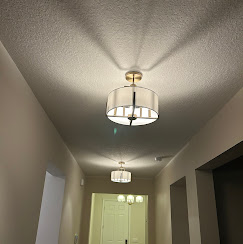
A single dark room with a breaker that looks fine usually points to a problem somewhere between the light switch, the ceiling fixture, and any junction boxes feeding that light. The rest of the house can be glowing like normal while one bedroom or home office stays stubbornly dark. That is a sign the circuit is still getting power, but something in that room’s lighting path has failed.
Here in the Bradenton and Sarasota area, older wiring methods, past DIY projects, and summer storm activity can all stress those connections. We will walk through what is actually happening in a typical light circuit, what you can safely look at, and why hidden junction boxes and switch loops cause so many headaches when only one room is out.
Why One Room Goes Dark While Everything Else Works
When a single room loses its overhead light but the breaker is on and other rooms are fine, people often blame the panel or the outlets. In many cases, the real trouble is higher up or inside the wall. The light circuit for that room is usually separate from nearby outlets, even if they share a breaker.
Common trouble spots are:
- The light switch loop that controls the fixture
- Connections inside the ceiling light box
- A hidden junction box between the panel and that room’s light
Why is it usually not the outlets? Often outlets are wired on a different branch or pass-through than the ceiling light. An outlet can keep working while the light circuit opens at a weak connection somewhere else.
In Bradenton-Sarasota homes we see:
- Older mid-century wiring that has been extended or spliced over the years
- DIY remodels where boxes were moved or covered
- Storm vibration and moisture that slowly loosen or corrode already weak splices
You can do some basic observing, like noticing what else goes out with that light, looking for water stains around the fixture, or gently removing a switch cover with the power off. Beyond that, it is safer to let a Bradenton electrical repair professional open boxes and test live conductors.
How a Light Switch Loop Actually Works
A lot of confusion starts with the switch loop. In many homes, power does not go to the switch first. It goes to the ceiling box, then down to the switch, then back up to the light. That means the neutral usually stays in the ceiling box and never goes to the switch at all.
In a classic switch loop:
- Power feeds into the ceiling light box from the panel
- One cable runs from that box down to the wall switch
- The white wire in that cable may be re-marked as hot, not neutral
- The switch simply opens and closes the hot going to the fixture
You might have a switch loop if you notice:
- Only two wires on the switch, usually a white and a black, plus ground
- No big bundle of white neutrals in the switch box
- More than one cable in the ceiling box, with whites and blacks tied together in wirenuts
- A white wire landed on a switch screw instead of tucked into a neutral bundle
Common failure points in switch loops include:
- Backstabbed switch connections that loosen over time
- Loose wirenuts in the ceiling box where loop wires tie into power
- A miswired white hot that was never marked or was moved incorrectly
- Corrosion on bare copper or exposed metal parts in our humid, salty air
Safety is key here. White wires in a loop can be hot. Power must be off at the breaker, and a non-contact voltage tester should be used to confirm that everything is truly de-energized before anyone touches conductors.
Safely Testing the Light Switch and Fixture Wiring
There are a few basic, low-risk checks a careful homeowner can do, always with power off and confirmed off. If anything looks confusing or damaged, that is the stopping point.
For the switch:
- Turn off the suspected breaker and label it so nobody flips it back on
- Remove the wall plate and gently pull the switch out without stressing the wires
- Look for burnt or brittle insulation, loose screws, or wires stabbed into the back instead of under screws
- If you have a simple continuity tester or multimeter, you can test the switch with the wires removed, checking that it closes when flipped on and opens when off
If the switch seems fine, then attention moves to the ceiling fixture:
- With power off, remove the fixture carefully and support it so it does not hang by the wires
- Look for a tight neutral bundle (all whites tied together) and a solid hot connection to the fixture lead
- Check wirenuts for signs of arcing, like soot, melted plastic, or a burnt smell
- Inspect the socket or LED driver for discoloration or loose parts
During Florida’s summer storm season, moisture can sneak into roof spaces and light boxes. Even if things look dry now, past leaks can leave corrosion that weakens wirenuts and screws. When we see any water staining, rust on the box, or greenish copper, we recommend having a pro check for hidden moisture damage along the whole circuit path.
Tracking Down Hidden Junction Boxes in Dark Rooms
A junction box is simply a protected spot where wires connect. By code, those boxes must stay accessible, with a cover, not buried behind drywall or tucked where no one can reach them. Still, older work or DIY renovations sometimes leave boxes hidden.
Symptoms that suggest a hidden junction box problem include:
- One room dark while nearby rooms stay normal
- Flickering in that room before the light finally fails for good
- A light that only works when another switch or light is on, hinting at a shared splice
Careful, non-destructive ways to narrow it down:
- Map what loses power together, for example just the overhead light or also a hallway light
- From the attic, follow cables that leave the panel area toward the dark room, looking for odd mid-run boxes under insulation
- Check for boxes near framing changes, such as where a hallway meets a bedroom or where older and newer framing meet
Covered boxes are not just a code issue. They are a fire risk, because loose or overheated connections can go unnoticed. In homes that had ceiling repairs after hurricane-season leaks, we often find boxes taped over or buried. That is work for a licensed Bradenton electrical repair technician with experience tracing circuits and opening only what truly needs to be opened.
Hurricane Season Stress on Light Circuits
Our late-summer hurricane season is rough on light circuits that are already marginal. Wind-driven rain can sneak into soffits, vent openings, and small gaps around roof fixtures, then drip into ceiling spaces and boxes. Even when water does not pour in, high attic humidity mixes with heat to speed up corrosion.
Moisture issues can:
- Corrode copper conductors and screw terminals
- Loosen wirenuts as materials expand and contract
- Leave residue that traps heat at connections
- Turn a once-okay splice into an open circuit that kills one room’s light
Before storm season gets busy, it helps to inspect accessible attic junctions above key rooms, make sure every box you can see has a proper cover, and check that fixtures in areas with past leaks are firmly mounted and sealed at the ceiling.
After big storms, pay close attention if:
- A dead fixture sits under a new or old roof stain
- You notice a musty or damp smell at a switch or ceiling box
- Lights in one room act up mainly during or right after heavy rain
Those are all signs to have a professional open boxes and test connections instead of resetting breakers over and over.
When to Stop Troubleshooting and Call for Help
There is a clear point where homeowner checks should stop. If you see or hear:
- Buzzing, crackling, or sizzling at the switch or fixture
- Visible charring, melted plastic, or smoked metal inside any box
- The same room losing light again after a recent fix
- Confusing wiring where it is not clear which conductor is hot
At that point, the safest move is to document what you noticed, which room and switch are affected, any stains or smells, and then leave the breaker for that circuit off. A licensed electrician can then test the switch loop, the fixture, and any junctions with proper meters, verify that all boxes are accessible and tight, and help your home’s lighting stand up better to our long, humid storm seasons.
Get Started With Your Project Today
If you are noticing flickering lights, tripped breakers, or outlets that are not working right, let Power & Lighting Solutions handle it before it becomes a bigger problem. Explore our Bradenton electrical repair options to see how we can restore safety and reliability to your home or business. We will walk you through what needs attention, provide clear pricing, and schedule work at a time that fits your routine. If you are ready to schedule service or have questions, simply contact us and we will respond promptly.