
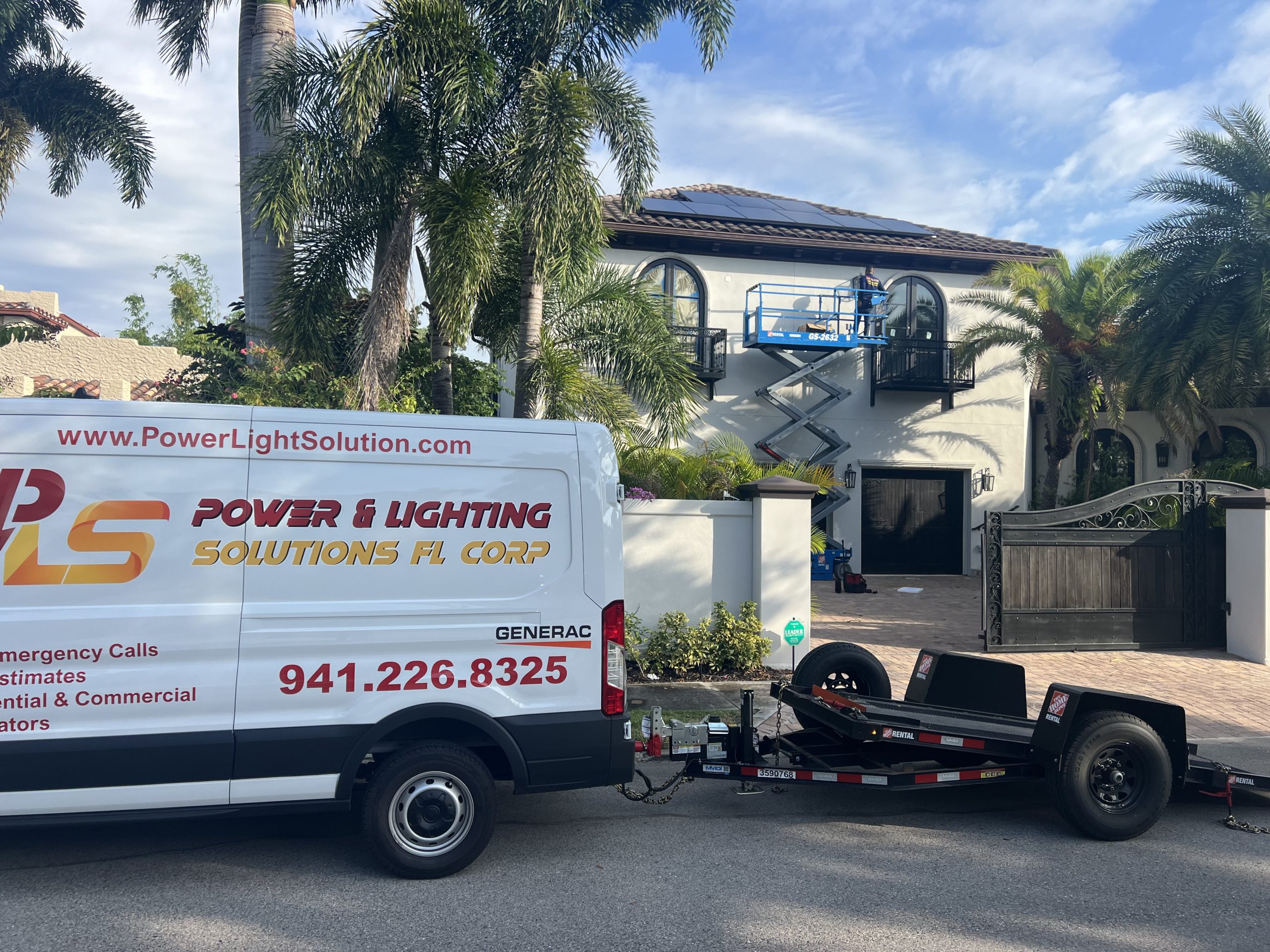
Hidden Dangers of a Failed Neutral in Bradenton Homes
A bad neutral wire in a home circuit is not just an annoyance; it is a real safety problem. When the neutral fails, your lights, outlets, and appliances can start acting strange, and parts of your system can overheat without you seeing it. In a worst-case scenario, it can damage electronics or even start a fire.
In a typical 120/240-volt Florida home, the neutral conductor does three big jobs. It completes the circuit so current can return to the source, it keeps voltages stable between the two hot legs, and it acts as a reference point so your 120-volt devices see the right voltage. When that neutral becomes loose, corroded, or broken, everything connected to it can start to behave in unsafe ways.
Around Bradenton and Sarasota, neutrals have extra stress. Humid, salty air can corrode lugs and terminals, especially at the service mast, meter can, and outdoor boxes. Critters in attics chew on insulation and disturb junction boxes. Storms can shake service masts and slowly work terminations loose. When neutrals fail, the risks include:
- Outlets and connections getting hot
- Lights flickering or turning oddly bright
- Sensitive electronics seeing wild voltage swings
- Metal parts becoming energized and shocking people
- Hidden heating that can lead to burned insulation or fire
How Neutrals Work in Split Phase Home Wiring
Most homes in our area have a split-phase 240-volt service. The transformer feeding your house has a center tap, so you get two hot legs and one neutral. Each hot leg to neutral gives you 120 volts, and hot to hot gives you 240 volts. Many branch circuits pull 120 volts from one hot leg and the shared neutral.
On multiwire branch circuits, two hot legs share a neutral, but they are on opposite phases. That way, when the loads are balanced, current on the neutral cancels out and stays low. If that neutral opens, those two 120-volt circuits can start feeding through each other, and devices see strange line to neutral voltages.
It also helps to know the difference between:
- Grounded (neutral) conductor: carries current in normal operation
- Equipment grounding conductor: carries current only during a fault
These two should only be bonded together at the main service disconnect. If they are tied together anywhere else, like in a subpanel or junction box, you can create unsafe parallel paths and shock hazards.
Shared neutrals show up a lot in:
- Kitchen small appliance circuits
- Laundry room circuits
- Older mixed copper and aluminum panel wiring from past decades
When those shared neutral terminations are loose or corroded, you get serious electrical troubleshooting in Sarasota and Bradenton homes.
Real-World Symptoms of Neutral Wire Failure
A failed or failing neutral rarely looks neat and tidy. It usually shows up as weird, scattered issues that do not seem related at first. Common signs include:
- Some lights dim while others nearby glow very bright
- Random breaker trips without clear overloads
- Buzzing or humming at fixtures or outlets
- One room loses power while another gets flaky power
Electronics are often the early warning. Line to neutral voltage swings are very hard on devices like:
- LED bulbs and smart switches
- Phone chargers and power strips
- Refrigerators and freezers
- HVAC thermostats and control boards
Intermittent neutral problems come from things like loose wire nuts or a partially burned splice in a junction box. These may show up only when certain loads run. Hard failures are different. A fully open neutral at a receptacle, panel bar, or meter lug will give consistent, repeatable issues until it is fixed.
Step-by-Step Neutral Diagnostics for Pros Only
Finding a neutral fault is not a beginner project. Trained electricians follow a careful process to stay safe and track down the problem.
First is a detailed visual inspection:
- Panel neutral bar for loose or double-lugged conductors
- Service entrance conductors and terminations for corrosion and heat marks
- Meter can connections for rust, water entry, and loose set screws
Then comes meter-based testing. With the right safety gear, an electrician will:
- Measure line to neutral voltage on each leg under different loads
- Measure line to line voltage to see if it stays stable
- Watch for unbalanced voltages that change when circuits are switched on and off
- Use a clamp meter to check neutral current where it should be low or near zero
Safe isolation is a key part of this work. Pros verify circuits are dead before opening them, avoid disconnecting a live neutral that is under load, and follow lockout/tagout steps when needed. In the Bradenton and Sarasota area, licensed electricians use insulated tools and arc-rated PPE any time they work near energized parts.
Tracing Neutral Faults in Walls, Attics, and Panels
Once we know there is a neutral problem, the next job is to find the exact location. In local homes, the bad spot often hides in:
- Backstabbed receptacle connections that have loosened over time
- Overfilled junction boxes in hot attics
- Splices buried under blown-in insulation
- Damp exterior boxes where wire nuts have corroded
Electricians use circuit maps, experience, and tools to track the fault. Tone generators help follow a conductor through walls. Non-contact testers give quick hints about where a neutral may be open, shorted, or mixed with another circuit on a multiwire run.
More advanced methods can include:
- Lifting neutral conductors off the panel bar one at a time to isolate the bad run
- Separating shared neutrals from multiwire circuits to test each leg
- Using small, controlled loads to gently stress the circuit and make an intermittent fault show itself
This kind of testing keeps the guesswork low and avoids tearing open more walls or ceilings than needed.
Neutral Failures and Florida’s Stormy Season
Our coastal weather is hard on electrical systems, and neutral conductors feel a lot of that stress. Wind can move a service mast just enough over time to loosen connections. Driving rain can work its way into meter cans and outdoor panels, slowly rusting neutral lugs and bars. Lightning surges can weaken neutral terminations that already have age or corrosion.
Storm season prep around Bradenton and Sarasota should include:
- Inspecting service mast heads and attachment points
- Checking meter cans and outdoor disconnects for rust and water entry
- Verifying grounding and bonding at the main service
- Reviewing any portable generator hookups and transfer equipment
Improper generator setups are a frequent source of neutral problems. Backfeeding through a dryer outlet, using transfer switches that do not handle the neutral correctly, or creating parallel neutral paths with bonded generators can all lead to dangerous conditions. After storms, careful electrical troubleshooting in Sarasota homes must always confirm that neutral and ground bonding is correct before normal use continues.
When to Get Professional Help for Neutral Problems
Any time you suspect a neutral issue, it is safer to stop and bring in a pro instead of testing things on your own. Warning signs that should never be ignored include:
- Lights getting brighter in one room while dimming in another
- Multiple appliances failing around the same time without breakers tripping
- A hot or burning smell near outlets, switches, or the main panel
- Tingling or small shocks from metal appliances or fixtures
At Power & Lighting Solutions, we approach neutral diagnostics with a full system mindset. That can include checking and torquing panel terminations, inspecting neutral bars and lugs, using thermal imaging to spot hot connections, balancing circuits, and documenting voltage and current readings so homeowners understand what was found and fixed. Our residential and commercial electrical work in the Bradenton and Sarasota area is backed by a two-year service warranty, and we have hands-on experience dealing with coastal corrosion and post-storm electrical issues that affect neutral conductors and panel connections.
Get Started With Your Project Today
If you are experiencing flickering lights, tripped breakers, or outlets that suddenly stopped working, our team at Power & Lighting Solutions is ready to help with expert electrical troubleshooting in Sarasota. We take the time to find the true cause of the issue so your home or business is safe and reliable again. Tell us what is going on and we will recommend the next best step for your situation. To schedule service or ask a question, simply contact us today.
Leave a Reply