
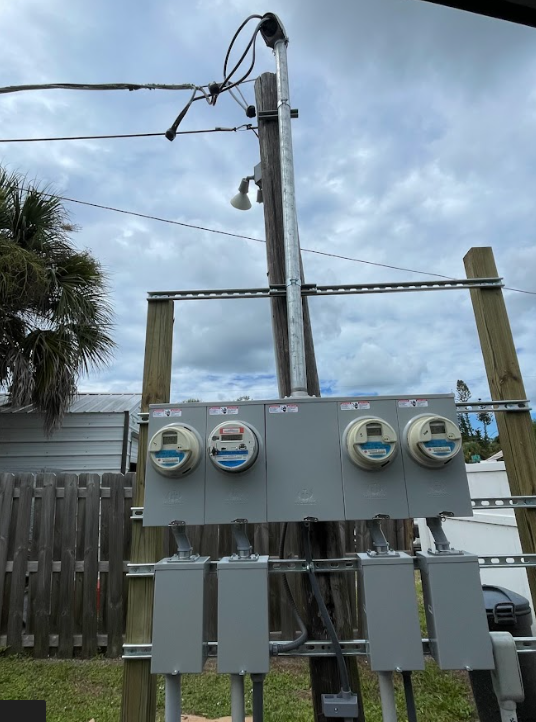
When Your Outlet Meter Makes No Sense
Strange outlet readings can make any homeowner feel uneasy. Your little three-light tester might say open ground or hot/neutral reverse, but your phone charger still powers up like nothing is wrong. That mix of normal and weird is exactly what makes electrical problems so stressful.
Those confusing lights are not random. In many homes, they point to one of three common wiring faults: an open neutral, a loose hot, or a bootleg ground. Each one can make an outlet test look wrong, or even impossible, while things seem to work on the surface.
Our goal here is to give you just enough technical understanding to spot warning signs, avoid unsafe DIY fixes, and explain what you are seeing when you call for electrical troubleshooting in Sarasota or nearby. You do not need to become an electrician, but you should know when your home is trying to tell you something is wrong.
Why Outlet Testers Lie More Than You Think
Those three-light plug-in testers are handy, but they are not truth detectors. Inside, they are very simple. They only look at voltage paths between hot, neutral, and ground, then turn on different light patterns using a small network of resistors.
Because of that, a single light pattern can mean different problems. For example:
- A missing neutral or a loose connection on the neutral might both show as open neutral
- A bootleg ground can make a bad outlet look perfectly wired
- High resistance in a wire might not show up at all
They also cannot see:
- Bootleg grounds where neutral is tied to ground at the receptacle
- Loose connections that only fail when something big turns on
- Issues hidden in junction boxes, splices, or the panel
So what are these testers good for? They are fine for quick checks, like:
- Confirming an outlet has power at all
- Catching simple miswires, like swapped hot and neutral
- Spotting obvious open grounds in newer wiring
For real diagnosis, an electrician will use a multimeter, continuity tests with the power off, and visual inspection of connections. That is how we figure out which specific fault is causing the strange readings, instead of guessing from three little lights.
Open Neutral, Loose Hot, and Bootleg Ground Explained
Now let us look at the three big troublemakers and how each one behaves in real homes.
Open Neutral: The Silent Voltage Trap
An open neutral means the white neutral wire is broken or disconnected somewhere on the circuit, while the hot wire is still intact. The break might be at the outlet, in a wire-nut, inside a junction box, or all the way back near the panel.
Typical symptoms include:
- Lights that glow dim or get brighter and dimmer randomly
- Outlets where only some devices work, or they work only sometimes
- Equipment that works only when another device is plugged into the same circuit
- Odd phantom voltages between neutral and ground on a meter
On a multi-wire branch circuit, an open neutral can be especially nasty. The loads on one leg can push the voltage on another leg higher than normal, which can damage sensitive electronics or appliances.
Signs it may be an open neutral:
- Your plug-in tester may say open neutral or show a confusing pattern like hot/ground reverse
- A non-contact tester still beeps on the hot slot
- A multimeter shows low or unstable voltage from hot to neutral, but hot to ground is closer to a normal 120 volts
Finding where the neutral is open usually means checking multiple boxes, connections, and sometimes the panel. In older homes or circuits that have seen storm damage, this is not something we recommend anyone without training try to trace on their own.
Loose Hot: Heat, Flicker, and Intermittent Power
A loose hot happens when the hot wire is only making partial contact. This might be from a backstab connection that is failing, a loose screw on a receptacle, a bad wirenut, or corrosion at a splice. The connection may pass power when there is little load, then break down when something big turns on.
Common clues include:
- Outlets that work sometimes, then suddenly stop
- Lights that flicker when the AC, microwave, or vacuum starts
- Warm outlet faces or cover plates after using devices
- Buzzing or crackling sounds at an outlet, switch, or light
A basic three-light tester can be fooled by a loose hot. With almost no load, the tester does not pull enough current to cause the connection to fail, so the lights may show a normal pattern.
What we often see when checking:
- Multimeter shows close to 120 volts with no load
- Voltage sags or jumps when a heavy device kicks on
- Thermal tools or a careful touch on the cover (never inside a live box) may reveal warm spots
Because loose hots create heat, they can be a fire risk. In coastal areas like Sarasota and Bradenton, humidity and salty air can speed up corrosion on metal parts, which makes loose connections even more likely over time.
Bootleg Ground: the Hidden Shock Hazard
A bootleg ground is a fake ground. Someone has tied the neutral and ground together at the receptacle, often with a short jumper wire between the neutral and ground screws, to trick a tester into showing a grounded outlet.
Why this is a problem:
- It makes the neutral and equipment ground share the same path where they should be separate
- Exposed metal on appliances can become energized without tripping a breaker
- Fault current might travel back through random paths like metal boxes, pipes, or cable shields
People often do this in older two-wire homes where there is no real ground present, instead of installing a proper grounding method or GFCI protection.
Possible signs of a bootleg ground:
- Every tester says correct on a three-prong outlet that you know was once a two-slot outlet with no ground
- With the breaker off, you still measure continuity between neutral and ground at that receptacle
- Under load, a meter might show a small but noticeable voltage between neutral and ground
Code requires neutral and ground to be bonded only at the main service disconnect, not out at regular outlets. Tracking and correcting bootleg grounds is work for a licensed electrician, not a DIY jumper wire.
Storm Season, Strange Readings, and When to Be Concerned
As we head closer to the heart of hurricane season, wiring problems tend to show up more. Wind, water intrusion, and power surges can loosen screws, corrode connections, and stress neutrals and grounds. Sometimes the problems do not show right away. Weeks later you may notice odd flickers or tester readings you never saw before.
If you suspect any of the faults we talked about, there are a few safe checks you can do without opening anything up:
- Turn off a breaker if you smell burning, feel a very warm device, or see strong flickering or sparking
- Make a simple list of which lights and outlets act up
- Note if the issue only happens when big loads run, like AC, dryers, or microwaves
- Think about whether recent storms, renovations, or DIY work line up with when the problem started
- Use a basic tester only to compare outlets and write down patterns, not to decide something is safe
This kind of information helps a lot when you call for electrical troubleshooting in Sarasota or Bradenton, because it points an electrician toward open neutrals, loose hots, or grounding issues faster.
At Power & Lighting Solutions, we spend a lot of time tracking down exactly these kinds of tricky faults, especially as the stormy part of the year ramps up and homes have already been stressed by heat, humidity, and heavy AC use. Getting a clear diagnosis of what is really behind those strange outlet readings is one of the best ways to protect your family, your electronics, and your property before the next big storm rolls through.
Get Started With Your Project Today
If you are noticing flickering lights, tripping breakers, or outlets that are not working properly, our team at Power & Lighting Solutions is ready to help. Learn more about how our licensed electricians handle electrical troubleshooting in Sarasota so you can protect your home or business and restore your peace of mind. When you are ready to schedule service or ask a question, simply contact us and we will respond promptly to get your project moving.
Leave a Reply