
Why Neutral Problems Can Make Your Whole House Go Crazy
A loose neutral can make a normal Bradenton or Sarasota home feel haunted. Lights brighten and dim for no good reason, appliances act strange, and some electronics fail while others keep running. All of that can trace back to one simple thing: the neutral connection that is supposed to keep your 120 and 240 volt system balanced.
In a typical home, the service neutral is the return path for current from all your 120 volt circuits. It sits between the two hot legs from the transformer and keeps both legs close to 120 volts to neutral. When that neutral is solid, your voltages stay steady and your equipment is happy. When it is loose, the whole house can start acting wild.
Homeowners often notice things like lights that get very bright in one area while others get very dim, electronics that fail early, or breakers that trip more often when the AC, dryer, or range kicks on. Telling the difference between a loose service neutral at the meter and a loose neutral inside the main panel matters. It affects:
- How fast the problem gets found and fixed
- Whether the issue belongs to the utility or the homeowner
- How safe your home is, especially during our storm season
How the Service Neutral at the Meter Actually Works
From the utility transformer to your meter base, you normally have three main conductors coming in: two hots and one neutral. The transformer secondary is center tapped, and that center tap is the neutral. The power company bonds that neutral on its side so both hot legs sit symmetrically around it, giving you about 120 volts from each hot to neutral and about 240 volts hot to hot.
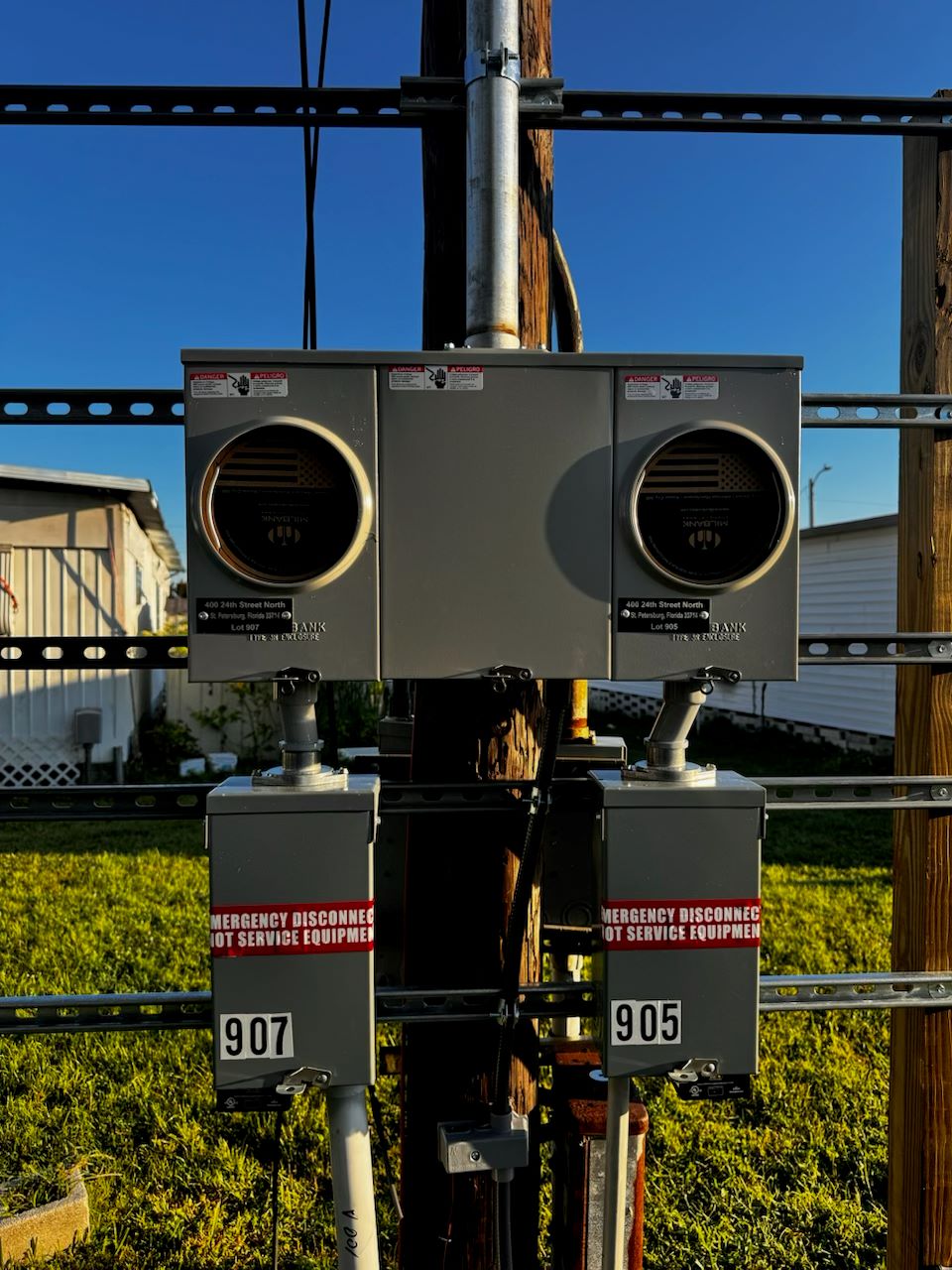
At the meter base, those three conductors land on lugs that hold the wires tight. The neutral lug and conductor are what keep the two hot legs from wandering off in voltage. Physically, several things can go wrong at this point, especially in our coastal, humid climate:
- Corroded lugs or meter jaws from salt air and moisture
- Loose set screws that loosen more over time from heat cycles
- Damaged or cracked meter sockets from storm impact or physical stress
- Aging aluminum service conductors that oxidize and lose good contact
When the service neutral at the meter gets loose, the neutral can start to float. The loads inside your house begin to pull the neutral point up and down. One leg can climb well above normal while the other drops below normal. Electricians often call this a see saw effect between the legs.
That floating neutral affects your whole house at once. Some likely results are:
- One group of 120 volt circuits runs high and can fry electronics
- Another group runs low and makes motors run hot or fail to start
- Symptoms get worse each time a big 240 volt load, like the AC or range, starts
- You may hear motors in fridges or air handlers change pitch as voltages swing
Because the problem is ahead of the main panel, almost every 120 volt load in the building can feel it at the same time.
What a Loose Neutral in the Main Panel Looks Like
The main panel is usually the first means of disconnect inside or on the outside wall of the home. In many single-family homes, this is where the neutral bar is bonded to the grounding system. All the branch circuit neutrals land on that bar, so every white wire there is the return path for one circuit or a multi-wire branch circuit.
Tight terminations here are very important. When neutrals are not tight, you can see:
- A single loose branch neutral screw that feeds one room or one set of outlets
- Burnt, darkened spots on the neutral bar near an overheated connection
- Double-lugged neutrals in older panels, two neutrals under one screw where only one is allowed
- Damaged or undersized neutrals on larger loads like ovens or subpanels
When the issue is inside the main panel, the pattern of symptoms changes. Instead of the whole home acting up, you tend to see problems limited to one area or a few circuits:
- Flickering or intermittent power only in a certain room
- GFCI or AFCI breakers tripping on the same circuits over and over
- One branch that kills electronics or causes power supplies to buzz
- Outlets where a simple bump to a cord seems to cause a brief outage
You do not usually see big leg to leg voltage swings across the entire house with a panel-level neutral issue. The problem is more local and follows the specific neutral that is loose.
Field Clues to Tell Meter Neutral From Panel Neutral
There are some clues that homeowners in Bradenton and Sarasota can notice without opening any equipment. For a possible loose service neutral at or before the meter, people often report:
- Lights in different parts of the home brightening while others dim at the same time
- Strange behavior when big loads start, such as the AC fan speeding up or lights surging
- Multiple rooms affected in different ways, not just one area
- Electronics failing in several rooms close together in time
When we perform electrical troubleshooting in the Sarasota area homes, we use test gear to separate meter issues from panel issues. Common steps include:
- Measuring each hot leg to neutral under load
- Measuring hot-to-hot at the same time
- Checking voltages at the meter base, then again inside the main panel
- Using clamp meters or data loggers to see how much current is really flowing on the neutral
The patterns tell the story:
- If the voltage imbalance already shows right at the meter, the problem is likely on the utility side or in the meter base and service conductors
- If voltages at the meter are stable but certain branch circuits in the panel show drops or swings, we suspect a panel neutral or branch neutral issue
- If only one circuit or room misbehaves while the rest of the house is stable, the fault is usually downstream from the panel
Hurricane Season Stress on Your Neutral
As we get deeper into hurricane season, neutral problems tend to show up more often. High winds, heavy rain, and lightning all put stress on service drops, meter bases, and panels.
Storm-related damage can include:
- Overhead service conductors that get pulled tight or bent at the mast
- Water getting into the meter socket or panel, starting corrosion that grows over time
- Lightning surges that heat a marginal connection just enough to loosen it more
Even if a storm did not cause an immediate outage, it may have weakened an already shaky neutral connection. Later, when the AC runs hard on a hot afternoon, that weak spot can finally act up.
Practical preventive steps many homeowners choose before the heart of storm season are:
- Having a licensed electrician inspect the service equipment, meter base, and main panel
- Having all neutral and ground terminations checked and re torqued to manufacturer specs
- Verifying that grounding electrodes and bonding jumpers are intact so surges and fault currents have a safe path
These steps focus on reliability and safety, not just comfort.
Next Steps When You Suspect a Neutral Problem
If you notice extreme bright and dim swings, or several odd symptoms across different rooms, treat that as an urgent safety concern. Some basic actions make sense:
- Do not open the meter or main panel yourself
- Unplug sensitive electronics like TVs, computers, and smart devices if you can do so safely
- Avoid running big loads such as electric ovens, dryers, or pool pumps until the issue is checked
- Call your utility right away if you suspect the service neutral or meter, since they control that side
A local licensed electrician can work with the utility to pinpoint where the problem starts. We can document voltage readings, compare measurements at the meter and panel, and confirm whether the fault is on the power company side or in the customer equipment. If the issue is in the panel or a branch neutral, we can repair connections, replace damaged components, and confirm stable voltages before you go back to normal use.
At Power & Lighting Solutions, we work with Bradenton and Sarasota homeowners who take flicker, unstable voltage, and strange whole house behavior seriously. When you address those symptoms early, you help protect your equipment, reduce stress on your AC and other large loads, and head into the height of hurricane season with more confidence in your electrical system.
Get Started With Your Project Today
If you are dealing with flickering lights, tripped breakers, or mystery outages, our team at Power & Lighting Solutions is ready to help. Learn more about our full range of electrical troubleshooting in Sarasota and how we pinpoint issues quickly and safely. When you are ready to schedule service or have questions about your specific problem, simply contact us and we will follow up promptly.